
Why Temple Grey Is the Hardest to Cover (And How to Actually Do It)
30 Aug 2026
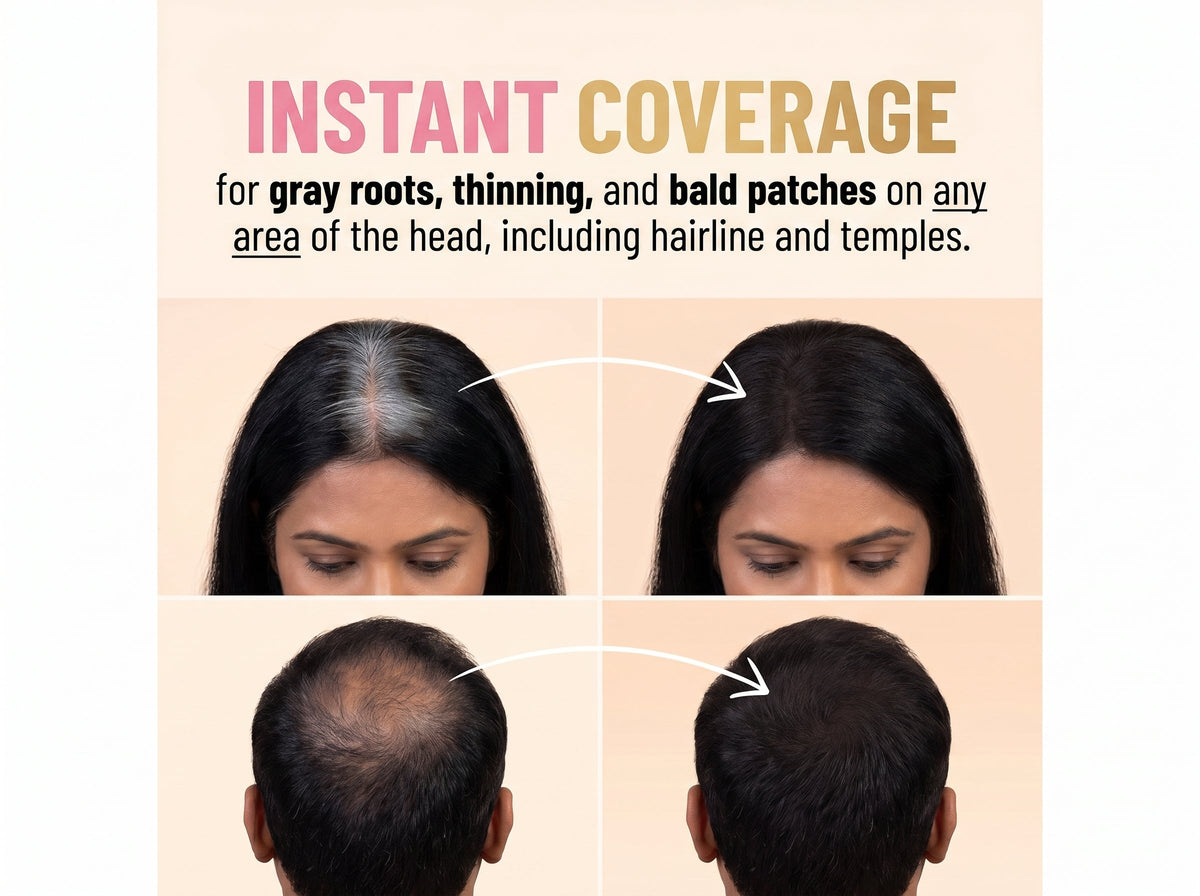
Temple grey is usually the oldest and most resistant grey on your head, so it takes colour less readily than the rest. To cover it, apply colour to the temples first, work it into the roots at the hairline, and leave it on for the full time. Rinsing early can leave the temples lighter than the rest.
Understanding why it happens makes it much easier to work around.
Why temple hair behaves differently
Grey hair in general has a tighter, more resistant cuticle than pigmented hair — the outer layer that colour needs to penetrate lies flatter and is harder to open. At the temples, this is usually the most advanced grey on your head, meaning those hairs have had the longest time to become coarser and more wiry. The cuticle there is thicker than anywhere else.
Add to that: temple hair is often finer in diameter despite feeling wiry, which means less surface area to hold colour. The result is hair that takes longer to absorb anything you put on it.
Why it shows the most
The temples frame your face. They're the first thing you see in the mirror and the first thing other people notice in a conversation. They also catch light directly — which means even a small amount of grey that remains after colouring is visible in a way that the same amount at the crown simply isn't. This is what makes temple coverage feel so all-or-nothing even when the rest of your hair looks great.
What actually helps with technique
A few adjustments make a real difference:
- Apply to the temples first. Colour absorbs more slowly there, so giving it the maximum possible processing time matters. Start at the hairline and temples before moving to the rest of your head.
- Work on dry or barely damp hair at the hairline. Wet hair dilutes the product slightly and can make it slide off coarser strands. At the temples specifically, applying on dry or towel-dried hair improves contact.
- Section the hair back. Pushing the hair away from the face and working colour directly into the roots at the hairline — rather than letting the product sit on top — ensures the strands are actually coated.
- Don't rinse early. The full processing time isn't a suggestion. Cutting it short by even a few minutes at the temples makes a visible difference.
Getting the temples right in one wash
Temple grey is the most resistant grey on your head, so technique matters most here. Apply to the temples first, work the product into the roots at the hairline, and leave it on for the full five minutes. Rinsing early can leave the temples lighter than the rest.
Managing skin staining along the hairline
The hairline is also where colour is most likely to stain skin. Applying a thin layer of any oil or thick moisturiser along the edge before you start gives you a barrier. If staining does happen, a cotton pad with a little oil or micellar water removes it within the first hour before it sets. Because colour goes on right at the skin here, patch test before you start, as the pack directs, and do it every time (FDA). PPD, found in many permanent hair dyes, is known to irritate skin or cause allergic reactions (NHS).
The same rule applies with a hair colour shampoo: temples first, then the full leave-on time, which is 5 minutes for Wooly.
The bottom line
Temple grey is the last to take colour and the first place anyone looks. Working product in there first, on dry hair, for the full time is how you actually solve it. It's a technique problem, and technique is fixable.
Sources
- US Food and Drug Administration. Hair Dyes.
- NHS. Hair dye reactions.
Wooly Hair Colour Shampoo is ammonia-free and covers grey in one wash. At the temples, apply there first, on dry or damp hair, and leave it on for the full five minutes. Try Wooly Hair Colour Shampoo →